
Madison County Arrest Warrants Explained
Chapter 15 of the Texas Code of Criminal Procedure governs how arrest warrants work here. It starts with a sworn complaint. The complaint must meet the statute's requirements and lay out probable cause before a magistrate can issue anything. Madison County residents should also know what a warrant is not. It is not a citation, not a summons, and not a search warrant. For a felony or a district capias, the District Clerk and the issuing District Court hold the answers. The Sheriff's Office may execute the process or take custody. Its public page, though, posts no complete arrest-warrant list, so the court file remains the real source.
Madison County Arrest Warrant Starts Here
Article 15.05 spells out what a complaint has to contain. Name or description of the accused. The offense charged. Probable cause, plus time and place details, and the complainant's signature. A magistrate or the court then weighs the legal basis. Madison County offers no online warrant application or issuance portal, so the paper trail lives at the courthouse. You can read the full statutory language in the Texas Code of Criminal Procedure Chapter 15. For a local felony, ask the District Clerk which request covers the complaint, warrant, affidavit, or a docket event.
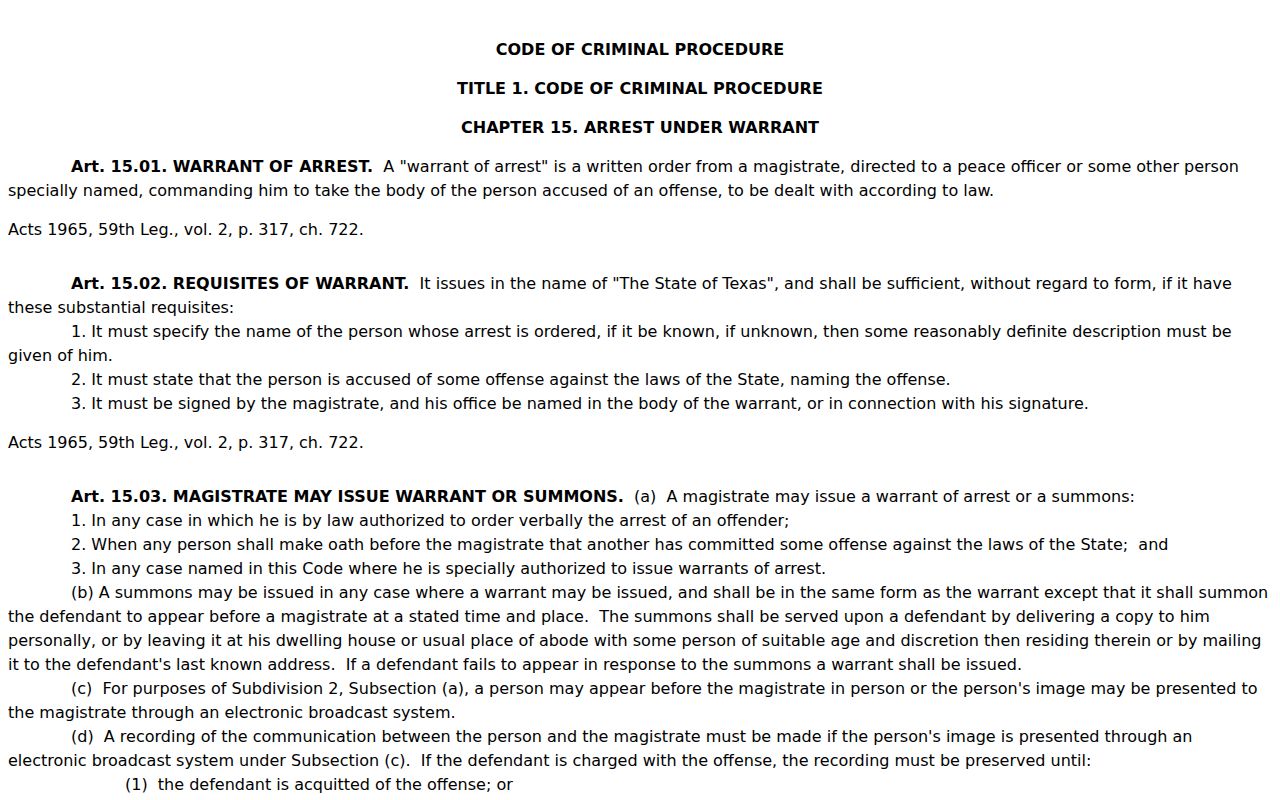
Madison County readers should note what the statute covers: process and access rules. It does not put every record online.
Inside a Madison County Arrest Warrant
Madison County publishes no warrant-number format or fixed search layout. What a court file holds depends on the record itself. You might see the issuing court, the cause number, a complaint or affidavit reference, the offense, the issue date, and bond or release terms. Later entries can show execution or a recall. Fields vary with what may lawfully be released.
| Case key | CAUSE NUMBER Use the private cause number or agency identifier supplied by the official office. |
|---|---|
| Complaint | Reference to the sworn complaint or supporting affidavit, subject to access limits. |
| Offense | The charge category and classification in the court record. |
| Issuing court | The court or magistrate that authorized the process. |
| Bond or release | Ask the court to explain any bond or release term; no countywide amount was located. |
| Execution and return | May show service, return, recall, or another later court event. |
Executed Arrest Warrant Records
Article 15.26 opens the door. It makes an executed arrest warrant and its supporting affidavit public information through the magistrate's clerk, subject to other law. Public does not mean posted online, though. A Madison County clerk may work by counter request or written copy request instead. A sealed or protected portion can still be withheld. When you ask for a copy, name the exact record type: warrant, complaint, affidavit, return, execution record, bond filing, or docket event. If only part of a document is protected, request a redacted or segregable copy. Two state laws can affect what a law-enforcement office releases, Government Code sections 552.101 and 552.108.
Serving Arrest Warrants in Madison County
Who serves a warrant in Madison County depends on the document. District judges and magistrates issue process within their own authority. The Sheriff, constables, or city police may then execute it. The county's public listings cover the Sheriff and two constable precincts, but they name no full assignment list and run no special warrant phone line. After an arrest, court and agency records may show the execution, the return, custody, or a later release event. Ask the issuing court which agency holds the process. Ask the Sheriff's Office about custody routing. Do not assume the Sheriff holds every warrant, because he may not.
Madison County Arrest Warrant Service Roles
Each office plays a distinct role. The issuing court controls its own case record and can name the agency that serves the process. The District Clerk keeps district filings and can route a request for a felony docket or a copy of an executed warrant. The Sheriff's general line handles law enforcement and custody calls. Madison County publishes no list matching each warrant to a serving officer. The record, the court, and the order set the route. Keep federal matters separate from county court business.
Comparing Arrest, Summons, and Bench Warrants
These terms are not interchangeable. A summons tells a person to appear. An arrest warrant authorizes an arrest on the required legal basis. A bench warrant usually follows a missed court obligation, and Texas records often say "capias" on the paper itself. For that route, see the Madison County bench-warrant page, which covers local capias and bond-forfeiture cases.
| Feature | Arrest Warrant | Summons | Bench Warrant |
|---|---|---|---|
| What it orders | Arrest under court process | Appear before the court | Arrest or return after a court obligation |
| Basis | Complaint and probable cause | Case-specific court or statutory process | Missed appearance or court violation |
| Who issues it | Authorized judge or magistrate | Issuing court or authorized official | The court handling the existing case |
| Next step | Confirm with issuing court or counsel | Attend as directed | Ask the court about appearance or recall procedure |
Search Warrants Follow Chapter 18
A search warrant is not an arrest warrant. It authorizes a search, nothing more. Chapter 18 of the Texas Code of Criminal Procedure builds its own rules around written orders, affidavits, execution, and sealing. An affidavit may become public after a search warrant is executed, though the statute allows sealing in some cases. Keep the two record types straight when you ask the District Clerk or a law-enforcement office for a document. A Chapter 18 result tells you nothing about whether arrest process exists. Read the full provisions in Texas Code of Criminal Procedure Chapter 18.
If There's an Arrest Warrant for You
Think a warrant names you? Start with the District Clerk or the issuing District Court. Ask whether the file shows current process, a bond setting, or a later recall. A clerk can explain procedure. A clerk cannot give legal advice. If an arrest, a felony charge, or a bond issue is on the table, talk to a licensed Texas attorney before you act. Options vary by case. They may include a court-directed appearance, bond action, voluntary surrender, or a motion asking the court to recall or quash the process. The court alone controls the outcome. Madison County filers should also ask how to get written confirmation once any step is done.
Important: Ask the issuing court about current status and speak with counsel when needed. A web result or an old docket is not a current court confirmation.
Federal Arrest Warrants Stay Separate
Federal cases are a different world from a Madison County warrant search. The county sits in the Southern District of Texas, Houston Division, and those matters run through the federal clerk and PACER, with U.S. Marshals executing federal process. Some federal warrants stay sealed, so a quiet docket does not mean the question is settled. The Southern District Houston Division page explains where jurisdiction falls, and the PACER service opens the public docket. Neither one works as a full warrant roster.
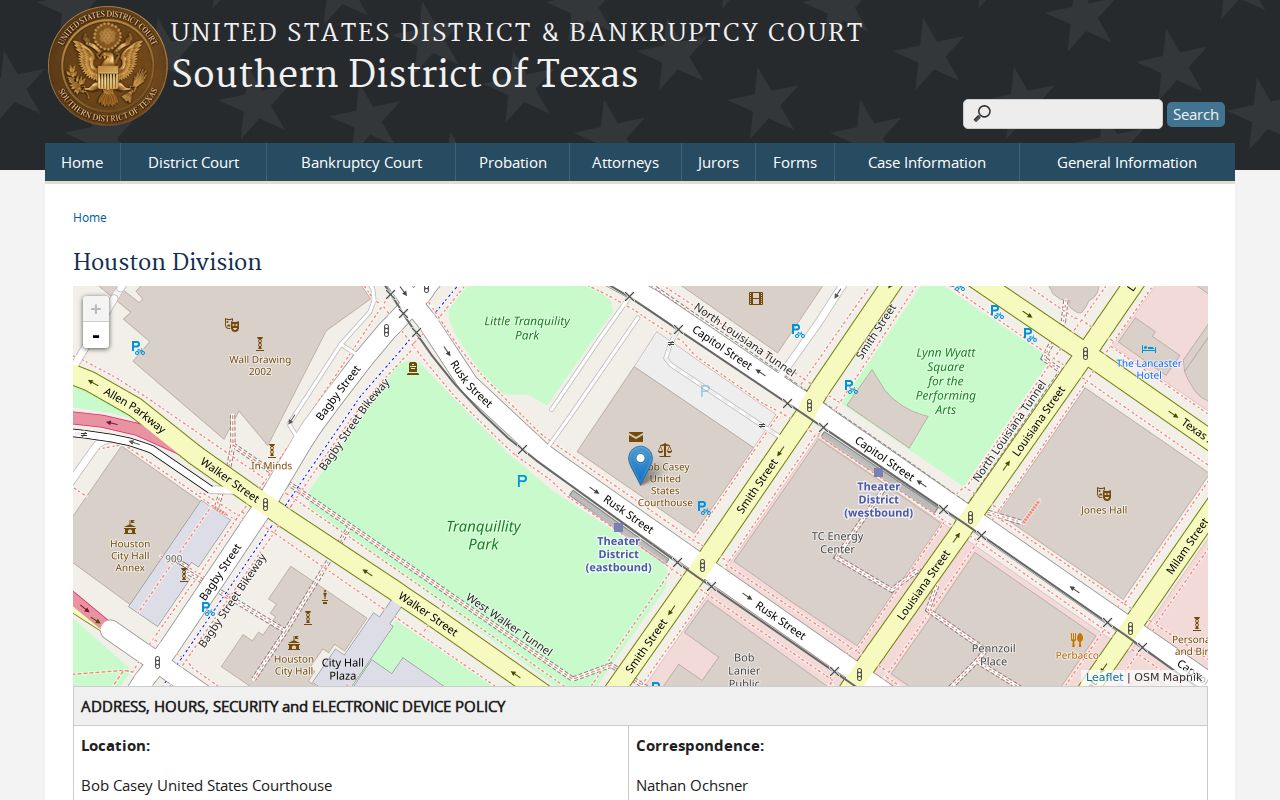
The division page shows district assignment, not local Madison County warrants. The docket service is documented at PACER, a court-record system rather than a warrant list.

Check current federal access rules and fees on the official service before requesting documents.